
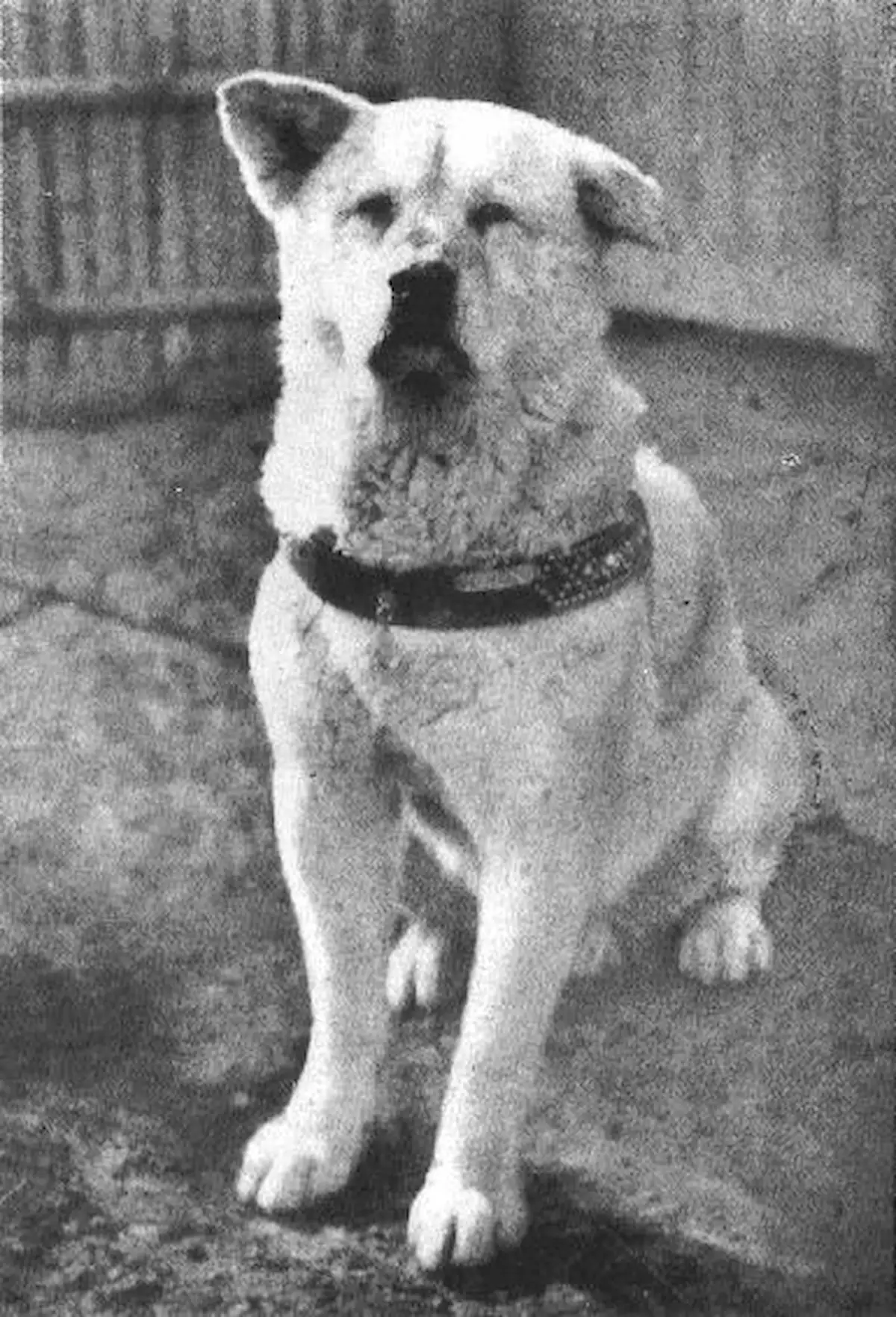
Every evening at exactly the right hour, a golden-brown Akita dog would trot through the crowds of Tokyo’s busy Shibuya Station, find his spot near the ticket gate, and wait. He was waiting for one man — the person he loved most in the world. The only problem was that this man would never walk through those gates again.
And yet the dog kept waiting. Not for a day. Not for a month. For nine years, nine months, and fifteen days.
This is the true story of Hachiko, the most loyal dog who ever lived.
Who Was Hachiko?
Hachiko was born on November 10, 1923, on a farm in the Akita Prefecture of northern Japan. He was an Akita — a large, dignified breed known for its loyalty and quiet strength.
In 1924, a professor named Hidesaburō Ueno, who taught agricultural science at the University of Tokyo, brought the young puppy home to live with him in the Shibuya district of Tokyo. The two formed an instant and powerful bond. To Professor Ueno, Hachiko was not a pet — he was family.
A Daily Ritual of Love
Every morning, Professor Ueno left home to teach at the university, traveling by train from Shibuya Station. And every morning, Hachiko walked with him to the station to see him off.
Then, each evening, as the professor’s train pulled back into Shibuya, Hachiko would be there — waiting at the gate, tail wagging, ready to greet the man he adored and walk him home.
It was a simple routine. But it was built on something deep: complete, unconditional devotion. Day after day, the dog and his owner repeated this loving ritual.
The Day Everything Changed
On May 21, 1925, Professor Ueno went to work as he always did. Hachiko saw him off at the station, just like every other morning.
But that day, while giving a lecture, the professor suffered a sudden cerebral hemorrhage. He died at the university. He never made it back to the train. He never came home.
That evening, Hachiko waited at Shibuya Station for a train that would carry his owner back to him. The train arrived. The crowds poured out. But Professor Ueno was not among them.
Hachiko did not understand death. He only understood that the person he loved had not returned — and that he would simply have to keep waiting.
Nine Years of Waiting
And wait he did.
Every single day, at the exact time the train was due, Hachiko returned to Shibuya Station and took up his post by the gate. He scanned every face in the crowd. He searched for the one scent, the one figure, that never appeared.
He did this through scorching summers and freezing winters. Through rain and snow. Year after year after year.
Hachiko was passed between relatives and former gardeners of the professor, but no matter where he was taken, he always found his way back to the station. Nothing — not time, not weather, not the impossibility of it all — could break his hope.
How Japan Fell in Love with Hachiko
At first, station workers and commuters didn’t understand the dog who showed up every evening. Some shooed him away. But over the years, the story spread, and people began to realize what they were witnessing: a loyalty so pure it defied explanation.
In 1932, a former student of Professor Ueno — who had become an expert on the Akita breed — wrote about Hachiko in a major Tokyo newspaper. The story struck the heart of the entire nation.
Hachiko became a symbol of loyalty and faithfulness. Commuters began bringing him food and treats as he kept his vigil. Parents told their children his story as a lesson in devotion. In April 1934, while Hachiko was still alive and still waiting, the people of Japan honored him with a bronze statue at Shibuya Station — and Hachiko himself attended the unveiling.
Hachiko’s Final Day
On the morning of March 8, 1935, Hachiko was found on a street near Shibuya Station. He had passed away peacefully. He was eleven years old.
He had waited for his beloved owner for nearly a decade — never giving up, never forgetting, never stopping his nightly search for the man who had loved him.
When the news broke, Japan mourned. Hachiko was finally reunited, in spirit, with Professor Ueno. Today, their resting places lie near one another — together at last.
Hachiko’s Legacy Today
Nearly a century later, Hachiko’s story still moves millions of people around the world.
- The bronze statue of Hachiko at Shibuya Station was rebuilt after World War II and remains one of the most famous meeting spots in all of Tokyo. Couples, friends, and travelers say, “Let’s meet at Hachiko.”
- His preserved remains are displayed at the National Museum of Nature and Science in Tokyo.
- In 2009, his story was retold in the Hollywood film Hachi: A Dog’s Tale, starring Richard Gere — introducing a new generation to the dog who waited.
He has become the world’s enduring symbol of loyalty, love, and the unbreakable bond between a dog and the person they choose as their own.
What Hachiko Teaches Us
We often say that we don’t deserve dogs — and Hachiko’s story is exactly why. He asked for nothing. He understood almost nothing of what had happened. He only knew that he loved someone, and that love did not end simply because the world told him it should.
For nine years, a dog stood by a train gate and refused to give up hope. In a world that can feel rushed and forgetful, Hachiko reminds us what real devotion looks like.
If you’ve ever been loved by a dog, you already know the truth at the center of this story: their loyalty is one of the purest things on earth.
Have a beloved dog of your own? You might enjoy [our guide to the most loyal dog breeds] or [the heroic story of Balto].