
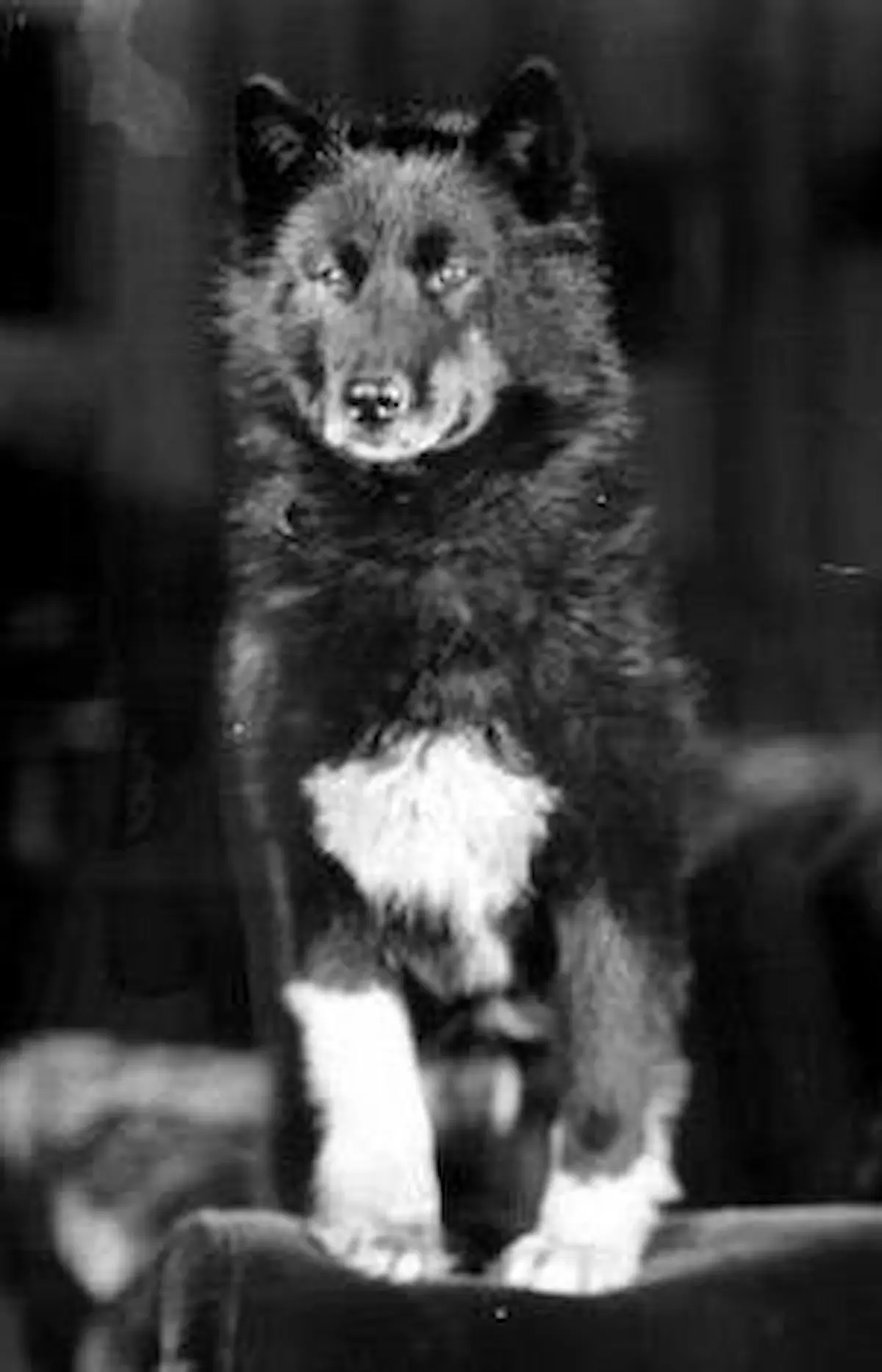
On a freezing February night in 1925, a black Siberian Husky led his exhausted team through a blizzard so violent that his musher couldn’t see past his own hands. Buried under the snow somewhere ahead was a trail no human could find. The lives of an entire town’s children depended on one dog’s instinct.
That dog was Balto — and by morning, he would be a national hero.
A Town on the Brink
In January 1925, the remote town of Nome, Alaska, was struck by an outbreak of diphtheria — a deadly disease that hit children the hardest. The only cure was a serum that sat nearly 1,000 miles away. With the sea frozen and aircraft unable to fly in the brutal cold, the town was completely cut off.
The only way to get the serum across the final stretch of frozen wilderness was a relay of dog sled teams, passing the precious medicine from one team to the next across hundreds of miles of ice and snow. The last and most dramatic leg of that journey would belong to Balto.
The Dog Who Led Through the Storm
Balto was the lead dog of musher Gunnar Kaasen’s team. As they set out on the final push toward Nome, a ferocious blizzard slammed into them. Winds howled. Snow blinded everything. Kaasen later admitted he often couldn’t even see the dogs pulling his sled.
But Balto could find the way. Using nothing but scent and instinct, he kept the team on the buried trail through the whiteout, refusing to stop or stray. At one terrifying moment, the sled flipped over and the container of serum was thrown into a snowbank. Kaasen tore through the freezing snow with his bare hands until he found it.
Through it all, Balto kept his team moving forward — straight into the heart of the storm.
Arrival in Nome
In the early hours of February 2, 1925, Balto led the team into the streets of Nome and delivered the serum. The medicine was thawed, administered, and the outbreak was stopped. The children of Nome would live.
A small dog had carried an entire town’s hope through a deadly blizzard — and won.
Overnight Fame
When the world heard the story, Balto became an instant sensation. Newspapers across America celebrated the heroic black Husky who delivered the serum. He toured the country. People lined up to meet him.
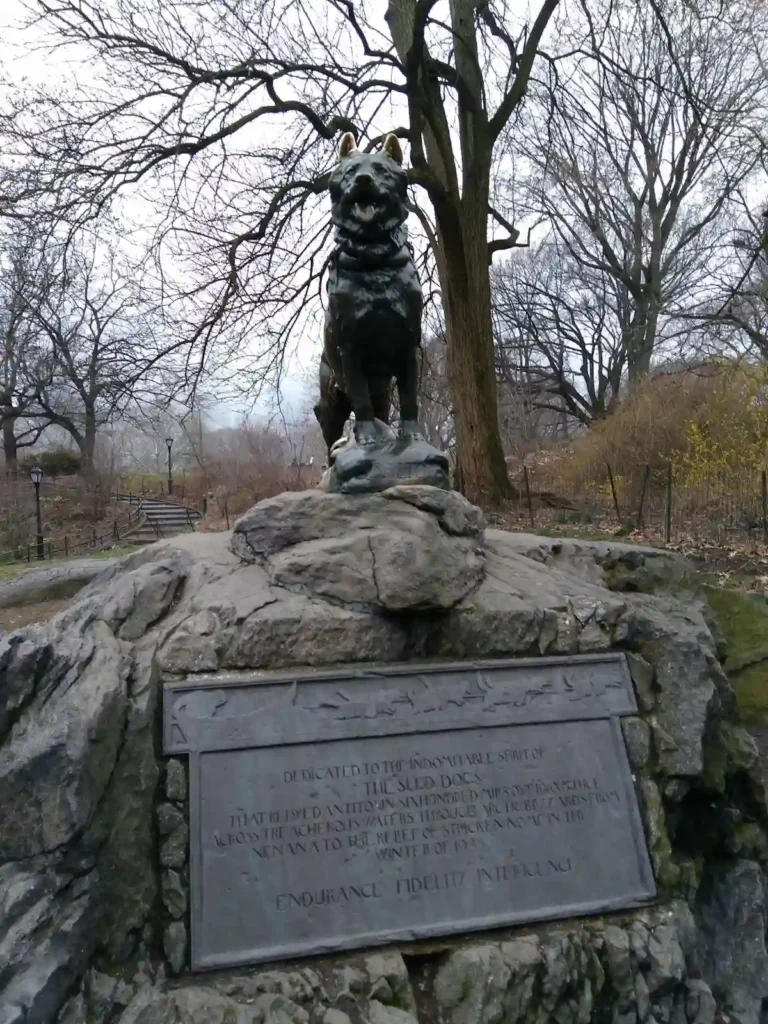
That same year, a bronze statue of Balto was unveiled in New York City’s Central Park. Nearly a century later, it still stands — one of the most beloved animal monuments in the world. Generations of children have climbed on it, and visitors still leave flowers at his paws.
When Balto passed away in 1933, his body was preserved and placed in the Cleveland Museum of Natural History, where it remains on display today — a permanent tribute to one of history’s most famous dogs.
The Bigger Story
Balto deserves every bit of his fame — leading a team through that blizzard was an act of pure courage. But it’s worth remembering that he ran only the final leg of a much longer relay.
Roughly 20 mushers and 150 dogs took part in the Great Race of Mercy. And the longest, most dangerous stretch of all was run by a different dog — an aging lead dog named Togo, who crossed the deadly ice of Norton Sound. Balto crossed the finish line, but many heroes ran before him.
Why We Still Remember Balto
Balto’s story endures because it captures something pure: a dog giving everything he had, in impossible conditions, to save people he would never understand he had saved.
He didn’t know about diphtheria. He didn’t know a town was dying. He only knew his team, his trail, and his musher’s trust. And that was enough to carry him through a blizzard and into history.
If you’ve ever been loved by a dog, you understand exactly why a small black Husky still has a statue in the heart of New York City.